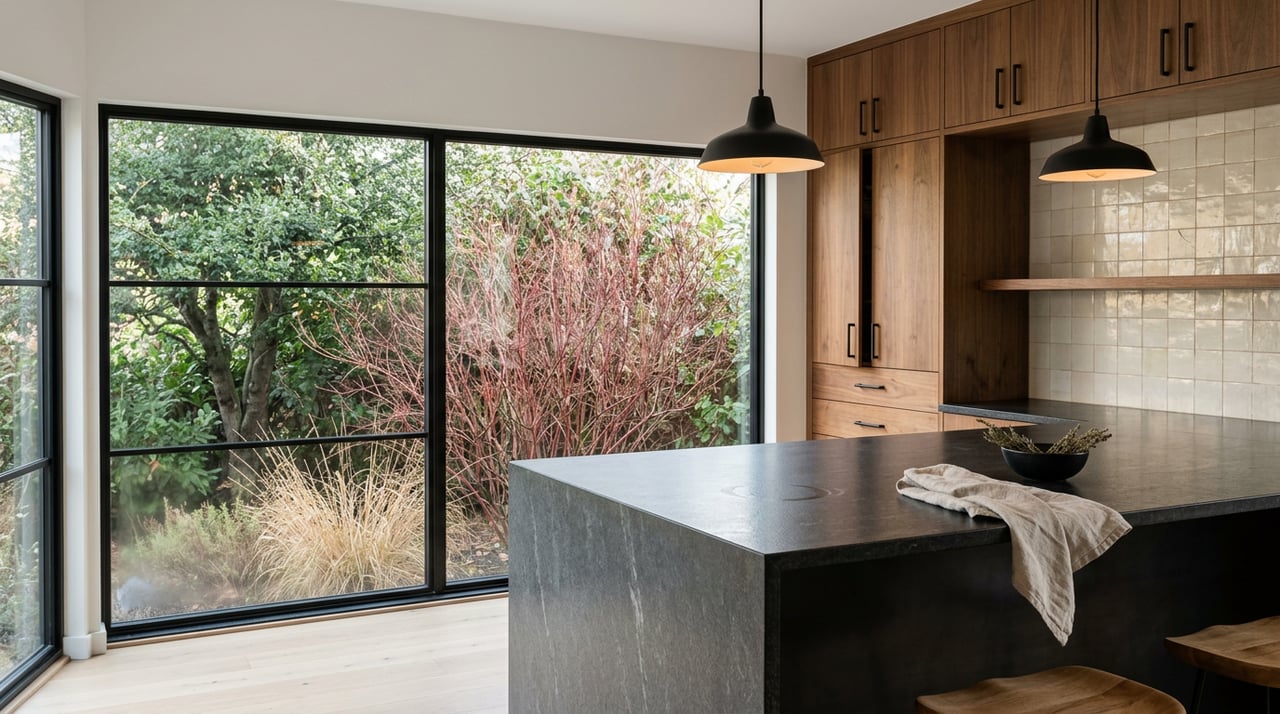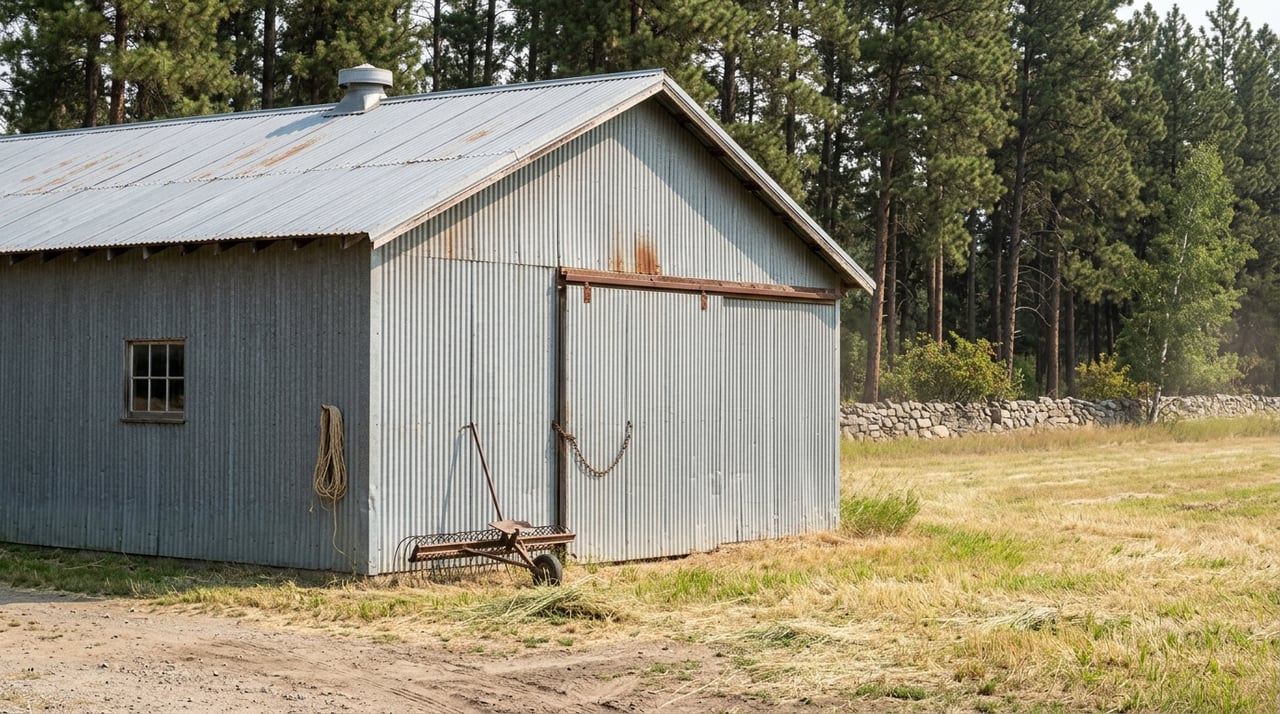
Two houses in Huson can sit on nearly identical acreage, share a fence line, and draw water from the same aquifer, and still land on tax bills that look like they belong to different states. The gap has nothing to do with square footage or finish level. It comes down to a single classification stamped on the county's assessment card, and that classification often runs opposite to what a buyer assumes going in.
Most people moving toward acreage figure the math works like this: buy more land, get treated more like a farm, pay less tax. Montana's agricultural land rules do reward genuine farms and large holdings generously. But there is a specific band of acreage, common in Huson listings right now, where that assumption breaks down and can work against the buyer instead.
Why More Land Doesn't Automatically Mean a Better Deal
Montana sorts rural parcels into three tiers, and the tier matters more than the acreage itself.
A parcel of 160 acres or more qualifies for agricultural classification automatically, regardless of whether it produces a dollar of farm income. A parcel under 20 acres, if it isn't farmed, simply gets taxed at ordinary market value like any residential lot in town. The middle tier, 20 to just under 160 acres, is where things get strict. To earn agricultural status there, the owner has to actively raise and market agricultural products and clear at least $1,500 in annual gross income from the land, a threshold that has not moved since 1986. Miss that bar, and the parcel isn't taxed at market value. It becomes "nonqualified agricultural land," valued using the statewide average productivity of grazing land and taxed at seven times the standard agricultural rate.
That middle bracket was built to discourage exactly what a lot of acreage buyers actually want: land to sit on, not land to work.
The 20-acre line isn't a discount threshold. It's the point where doing nothing with the land costs you the most.
Three Parcels, Three Different Tax Realities
Huson's current inventory spans all three tiers at once. Recent listings have included a 1.34-acre parcel with Nine Mile Creek frontage, a handful of 3- to 6-acre building sites described as productive pasture, and forest inholdings running 16 and 20 acres. Here is how the classification tiers actually treat each:
| Parcel size | Default treatment | What triggers agricultural status |
|---|---|---|
| Under 20 acres | Taxed at market value | Can still qualify if it produces $1,500+ in annual ag income |
| 20 to under 160 acres | Taxed at market value only if it fails the ag test; otherwise falls into the penalty-rate "nonqualified" category at seven times the ag rate | Must show active farming use and $1,500+ in marketed agricultural income |
| 160 acres or more | Qualifies for agricultural classification automatically | None, unless devoted to residential, commercial, or industrial use |
A buyer comparing a 12-acre Huson lot to a 25-acre one two roads over might reasonably expect the larger parcel to carry the lighter tax load. Depending on how that 25 acres is actually used, the opposite can be true.
The Deadline Buyers Walk Past
Agricultural classification isn't automatic paperwork that follows the land forever. It has to be filed for, and the window is narrow: the Montana Department of Revenue requires the Agricultural Land Classification Application, Form AB-3, by March 1 of the tax year in question. Buy a qualifying parcel partway through the year and the classification the previous owner held generally carries through that tax year, but the new owner still has to file to keep it going, and the department can ask for renewed proof in later years that the land is still meeting the use and income tests.
The stakes of getting this wrong show up clearly in a Montana Free Press investigation into two similar Flathead Valley homes on comparable acreage. One carried a tax bill of roughly $9,100. The other, classified agricultural, paid a fraction of that. Same style of house, same general setting, wildly different bills, all traced back to a classification decision rather than anything about the properties themselves.
The Well Rule That Just Changed
Huson runs on private wells. Listings routinely mention "good wells in this area," and that infrastructure detail matters more this year than it has in the past. As of January 1, 2026, anyone planning to use a new well under Montana's exempt-well permit exception has to file a Notice of Intent with the Department of Natural Resources and Conservation before putting that water to use, rather than drilling first and filing paperwork after.
The change traces back to a 2024 court ruling, often called the Horse Creek Hills case, that found the DNRC had been allowing developers to stack multiple exempt-well allowances across subdivision phases in ways the law didn't actually support. The fix, passed as House Bill 681, requires DNRC to review and authorize each Notice of Intent within 10 business days, which is a faster turnaround than the old process but still a step that has to happen before drilling, not after. For a buyer planning to build on raw Huson acreage that doesn't already have a permitted well, this is now part of the sequence, not an afterthought.
Before You Write an Offer on Huson Acreage
A few questions are worth settling before an offer goes in, not after closing:
- Ask the seller or the Montana Department of Revenue's local field office whether the parcel currently carries agricultural classification, and if so, what use qualifies it.
- If the parcel is between 20 and 160 acres and isn't classified agricultural, find out why. It may simply not qualify, which means it's likely sitting in the nonqualified penalty tier rather than at ordinary market value.
- Check the Missoula County building permit process before assuming a raw parcel is build-ready. A septic permit has to be finalized before the county will issue any construction permit, and that process depends heavily on when and how the parcel was originally created.
- If the property will need a new well, confirm where it stands in the Notice of Intent process before setting a closing timeline around it.
- Search the DNRC Water Right Query System for any existing water right tied to the parcel's legal description, since a well log alone does not establish one.
What This Means If You're Weighing Huson Against In-Town Missoula
As of June 2026, Huson's median list price sat close to $995,000 on a median lot near five acres, a very different price-to-land equation than anything inside Missoula city limits. That number alone tells a buyer what the land costs to acquire. It says nothing about what it costs to hold.
Two Huson parcels priced identically on the listing sheet can carry meaningfully different annual costs once classification, water rights, and septic history are factored in. That is the piece the sticker price never shows, and it's exactly where a buyer moving from an in-town lot into acreage needs a second set of eyes before deciding what "affordable" actually means out here.
Frequently Asked Questions
Does agricultural classification transfer automatically to a new owner? It generally continues through the tax year of the sale if the previous owner held it, but the new owner has to file to keep it going in future years and may need to prove the qualifying use continues.
What if my parcel is under 20 acres? Are there any agricultural options at all? Yes. Smaller parcels can still qualify for agricultural classification if they meet the same $1,500 annual gross income test from raising and marketing agricultural products, even without hitting the 20-acre mark.
Does keeping a horse or two count as agricultural use? Not on its own. Montana law specifically excludes grazing kept as a hobby, rather than as part of a genuine agricultural operation, from qualifying.
When do I need to apply, and can I still make it if I close mid-year? The application window (Form AB-3) runs through March 1 for that tax year. If you close after that date, plan to file the following March and budget for the interim tax treatment based on the parcel's current classification.
Acreage math in Huson rewards buyers who ask the right questions before they write an offer, not after they've closed. Bethany Taylor works this stretch of the valley regularly and can walk you through what a specific parcel's classification, water rights, and permit history actually mean for your bottom line. If you're comparing Huson acreage against other Western Montana options, reach out before you get deep into due diligence rather than after.