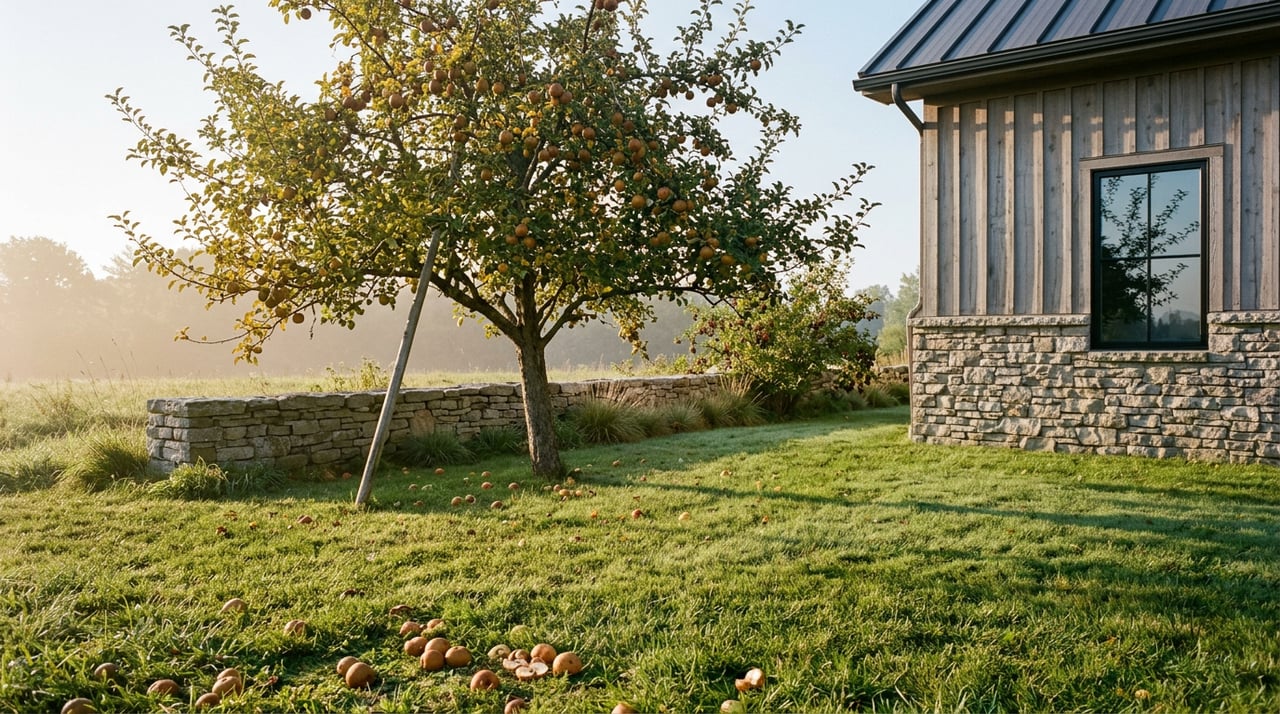
An unpicked apple tree in most towns is a nuisance. Somebody has to rake up the drops before they rot on the lawn, and the yellow jackets show up if you wait too long. In Huson, that same tree is something closer to infrastructure. It sits inside one of the tightest wildlife pinch points in Missoula County, and if the fruit is left hanging past Labor Day, it turns a backyard into a feeding stop on a route that grizzly bears have used to move between two of the largest intact wild areas left in the lower 48 states.
That is not an exaggeration for effect. It is the reason a volunteer nonprofit has spent two decades turning fruit harvesting into a community event instead of leaving it to individual homeowners to figure out on their own.
The Narrowest Point in the County
The Ninemile Wildlife Workgroup, a 501(c)(3) founded in March 2005, exists because of a specific piece of geography most people driving past Exit 85 on I-90 never think about. Contiguous federal and tribal lands come closer together in the Sixmile and Ninemile area than anywhere else in Missoula County. Much of that public land is roadless, with almost no infrastructure to speak of, and a large share of the private land around it sits under conservation easements that keep it undeveloped. Put those pieces together and you get one of the best remaining routes for wildlife to move between the Northern Continental Divide Ecosystem and the Selway-Bitterroot Ecosystem.
That connectivity is the whole point of living out here for a lot of people. It is also why the valley pays closer attention to bear conflicts than towns that do not sit on a documented movement corridor. When a grizzly can travel between two major ecosystems, keeping that route free of easy calories and dangerous encounters becomes a shared project, not a private one.
Twenty Years of Learning This the Hard Way
The Workgroup did not start with a cider festival. It started with cheaper bear spray, sold at cost to get more of it into people's hands, and with public meetings where residents could ask bear experts direct questions about what to do when an animal shows up in the yard. From there it moved into infrastructure. The organization partnered with Defenders of Wildlife for two years to help landowners build electric fencing around crops and livestock, covering up to half the material cost while the owner covered the rest.
The largest single project came in 2014, funded by a grant secured two years earlier. It placed 108 bear-resistant garbage carts across the Six Mile and Lower Nine Mile Valleys at a cost of $32,000, targeted at the stretch of road judged most effective for reducing conflict. Three coordinators still work the Nine Mile and Six Mile Valleys today, staying in contact with Jamie Jonkel, the Region 2 bear manager for Montana Fish, Wildlife and Parks, to track bear and mountain lion activity and pass that information along to neighbors.
Fruit trees turned out to be the piece nobody had solved. Garbage cans can be bear-proofed. An apple tree in full drop cannot.
Where the Ritual Landed
The fix that stuck was simple: get people together, pick the fruit before the bears do, and make cider out of it. The event grew out of a broader push in 2018, when the Missoula-based Vital Ground Foundation expanded its conflict-prevention grants after securing an annual pledge from the ALSAM Foundation. Apple pickup and pressing was one of the projects it funded that year specifically to improve safe passage for bears moving between the Ninemile and Bitterroot mountains. A local cidery even produced a batch from the collected fruit, with a share of the proceeds going back into the program.
The event has stayed close to that original shape. Residents bring apples from their own trees, or store-bought fruit if they don't have any, and the group presses it into cider on site. Bring apples and you take home a quart of what you helped press. Show up without any and you still get a taste for free.
October 10, This Year
The 2026 Apple Cider Festival and Chili Cookoff runs from 10 a.m. to 2 p.m. on October 10 at the Nine Mile Community Center, in the historic Stark Schoolhouse building on Ninemile Road. It is free, family-friendly, and framed the way the Workgroup has always framed it: harvest your fruit trees and help save local bears.
A few things worth knowing before you go:
- Bring your own quart-size containers if you want to take cider home
- Fruit contributors get a free quart back; everyone else can still sample fresh-pressed cider
- The chili cookoff runs alongside it, with pre-registered entries judged on site
- The Community Center sells its own merchandise at the event, including glass growlers, if you want a souvenir that isn't cider
Past years have paired the pressing with live music and demonstration tables on living safely in bear country, run by the same volunteer network that handles the bear-resistant can program. It reads like a harvest party. It functions as a maintenance shift for a wildlife corridor that runs through people's backyards.
The Other Calendar Running at the Same Time
The festival lands five weeks after Montana's archery big game season opens on September 5, 2026, and both dates are pointed at the same stretch of fall. Bears are working through the last weeks before denning, looking for anything calorie-dense, which is exactly why an unpicked orchard becomes a liability right when hunters start moving through the same forest looking for elk and deer. The valley is unusually busy with people and unusually busy with wildlife in the same six-week window, and neither calendar defers to the other.
If you want quieter ground before the woods fill up with hunting pressure, Kreis Pond is a reasonable place to spend a Saturday while the weather still allows it. The seven-acre pond, reached via the gravel loop roads past the Ninemile Ranger Station, sits inside the Lolo National Forest and is stocked with westslope cutthroat trout. Its campground stays open through December 1. The Sleeping Woman trailhead sits nearby if you want the harder version of the day, a steep enough climb to earn a panoramic look back at the Missoula Valley and the surrounding mountains. Both spots tend to quiet down once general rifle season opens on October 24 and pulls attention toward hunting units instead.
The Point of All of It
None of this is really about apples. It is about a valley that treats a shared wildlife corridor as something that requires actual upkeep, not just good intentions, and has built the calendar around that fact for twenty years. A resident who shows up to press cider on October 10 is doing the same work the electric fencing and the bear-resistant cans were built to do. The apples just happen to be the part that turns into a party.
That is the kind of detail that tells you more about a place than any listing photo ever could. If you already call Huson home, mark the date. If you are still learning the rhythms of the Ninemile Valley from a distance, it is worth knowing that this is what fall actually looks like out here, long before any of it shows up in a market report.
For more on what makes Huson and the surrounding valley communities distinct, explore the neighborhood guide built by Bethany Taylor, a Missoula-based broker with Glacier Sotheby's International Realty who spends as much time learning these valleys as she does selling homes in them.